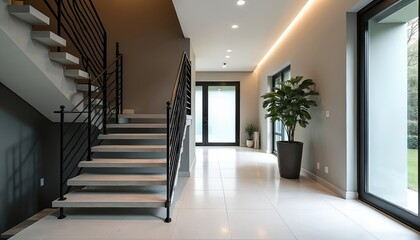
Metal Stairs Railings help prevent trips and falls. They’re crucial for homes with young children or elderly family members who have difficulty moving around stairs or other elevated areas.
Building codes set specific requirements for the height and spacing of handrails to ensure safe egress during emergencies. The design of these systems needs to meet strict strength and durability standards.
Grip Spacing
Metal railings are a popular choice for property enhancement, complementing residential spaces and commercial environments. They can enhance aesthetics while providing safety and support for residents. In addition, they can serve as a barrier against falls in workplaces, where they are governed by safety regulations enforced by the Occupational Safety and Health Administration (OSHA). For this reason, it’s essential that guard rails have proper grip spacing to prevent accidents during rapid descents of stairs or in emergency situations involving smoke or darkness. Grip spacing should also be able to accommodate people with disabilities. This requires selecting ADA-compliant designs to ensure that all people can safely navigate your property.
Height Requirements
A handrail is the graspable rail you hold as you travel up or down stairs, ramps and inclined surfaces. It provides safety and support for everyone, but it’s especially important for individuals with mobility challenges or physical impairments. Because they enhance accessibility, handrails are designed to meet specific standards that ensure safety and compliance with building codes. In the United States, for example, workplace safety regulations overseen by the Occupational Safety and Health Administration (OSHA) dictate guardrail heights and load requirements.
OSHA guidelines specify that top rails must be between 34-38 inches high, and midrails must be a minimum of 28 inches above the ramp surface or stair nose. They also require clear clearance from obstructions, smooth surfaces to prevent snagging and must be easy to grip. This design criteria addresses both public and private buildings, as well as workplaces that open to the public.
Local code amendments can add to these baseline rules. For instance, some jurisdictions require guardrails at a lower height on mezzanines and other elevated walkways. Additionally, they may mandate that midrails be spaced farther apart to keep small children from getting trapped.
These dimensional rules are paired with structural performance criteria outlined in the International Building Code (IBC). Industry summaries, deck-railing references and glass-rail manuals stress two key numbers: Guardrails must provide a continuous grip that’s smooth and unbroken throughout the length of a stair flight or ramp. They must be able to support a concentrated load of 200 pounds applied at the top rail in any direction without failure.
In addition to meeting these dimensional guidelines, all metal railings must be constructed from a non-combustible material that can withstand fire conditions. Aluminum is the most popular choice, but other materials such as steel and stainless steel are also available.
The construction process plays a significant role in how well metal railings stand up to fire conditions. The attention to detail that goes into the design and fabrication of a quality metal railing ensures that it will perform to the highest standards in any climate. For instance, Fortress’s Al13 PLUS aluminum and Fe26 steel railing systems are pre-welded to eliminate weak spots that can degrade under extreme heat and given a high-quality powder coating for unparalleled corrosion resistance in coastal areas.
Grip Length
Grip length might seem like a small detail, but it’s crucial to creating durable connections. It’s the unthreaded portion of a bolt shank that clamps materials together, evenly distributing force and safeguarding threads from excessive stress. Overlooking grip length can weaken joints, lead to loosening and corrosion, and potentially create safety hazards.
Gripping length is determined by summing the thickness of the components being joined, including any washers or spacers. Then, subtract the bolt head or nut from that number to find the grip length (also called clamped length). When selecting a fastener, be sure its grip length is slightly longer than the sum of the materials being joined, which helps ensure proper clamping without overloading the threads. The type of material being joined also has an impact on grip length selection. Softer materials may compress under load, which requires a longer grip length to compensate. Harder materials, such as metals, are less likely to compress and can be fitted with shorter grip lengths that help maintain preload under dynamic loads.
Steel railings complement a wide range of property environments, from residential homes to commercial offices and warehouses. Their versatile design allows them to blend seamlessly into the aesthetics of each setting while ensuring safety, functionality and longevity.
Aside from their safety benefits, steel railings can also enhance the overall curb appeal of a home’s exterior. This versatility makes them a popular choice for both new construction and renovation projects, offering an easy way to add value while improving safety and security.
While metals are known for their durability and strength, it’s important to select a model that can withstand different weather conditions. For example, in warm and sunny regions, consider a lighter shade to protect against heat buildup and fading. In coastal areas, choose a stainless steel option to combat the corrosive effects of salty air and sea spray.
Regardless of their application, metal railings must comply with various state and federal standards. For instance, stair guards must be at least 34 inches tall when measured vertically from the walking surface or nose of stairs to prevent slips and falls. Additionally, handrails must be at a height that accommodates individuals with mobility limitations.
Design Considerations
When used properly, metal railings not only prevent accidents but also complement a space’s aesthetic. However, missteps during the selection process can result in premature deterioration and costly alterations, so it’s important to understand what goes into selecting the right materials for the job. By avoiding common mistakes, architects can save time and money while ensuring their railings meet code requirements and enhance safety and security.
Railings are a vital safety feature for both home and commercial spaces, providing stability on stairs and balconies. They prevent accidental falls, especially for elderly and children. Proper height prevents shifts in body balance, while a gap-free surface eliminates potential tripping and entrapment hazards. In addition, handrails help people with limited mobility navigate staircases. Aside from improving functionality, handrails also contribute to property security by deterring climbing. To meet safety standards, top rails should be able to withstand 200 pounds of force in any direction. Additionally, top and midrails must have smooth finishes to avoid snagging clothing or equipment.
In some areas, local building codes add to the minimum standards outlined in national regulations, such as ADA (Americans with Disabilities Act) guidelines. Understanding local code requirements allows architects to design compliant railing systems that will pass inspection on the first try. In addition, working with a metal fabricator who has extensive knowledge of regional building codes and standards reduces the risk of expensive changes later on in construction.
Selecting the right metal for a specific environment also impacts durability, with some alloys better suited to high traffic levels than others. Steel is a popular choice for outdoor environments, as it combines strength with low maintenance costs and rust resistance. However, if the railing will be exposed to frequent moisture or chemical exposure, stainless steel may offer more longevity.
Customization transforms railings from generic safety features into integrated design elements that respond to architectural details and functional needs. For example, integrating lighting solutions into railings illuminates stairwells for safe navigation at night, while coordinating color options creates visual cohesion with established architectural themes. Other functional customizations include wider spacing to prevent obstructing views or specialized handrail profiles that meet accessibility requirements. By taking these unique considerations into account, architects can maximize safety, efficiency, and design aesthetics in their projects.